
Metro’s new D Line subway extension will open tomorrow. The transit riding public can get on “the D” starting at 12:30 p.m. on Friday, May 8. The entire Metro rail/bus/bike-share system is free from Friday through Sunday. Read more about tomorrow’s opening celebrations.
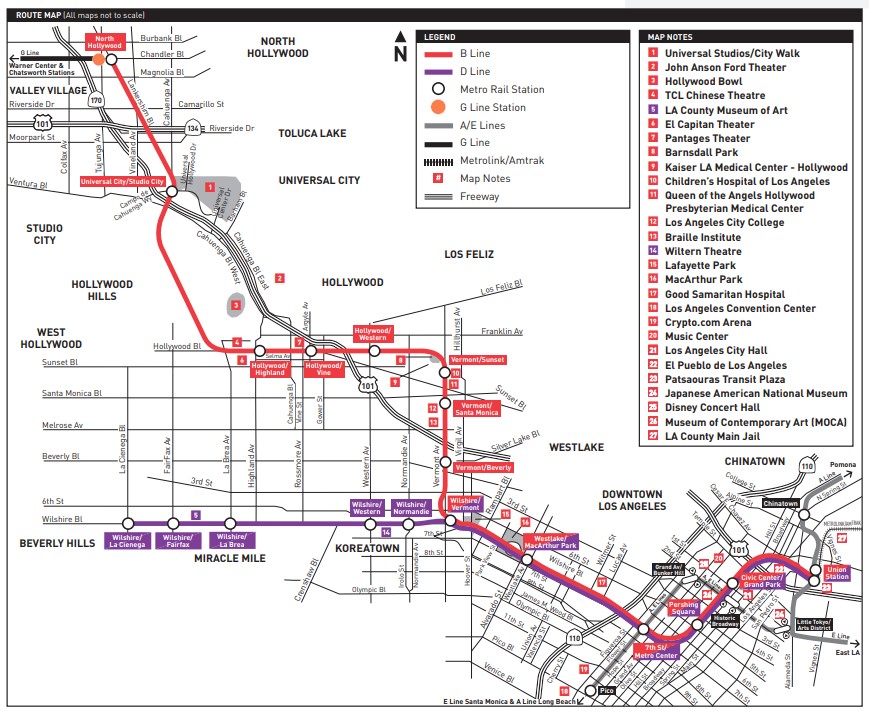
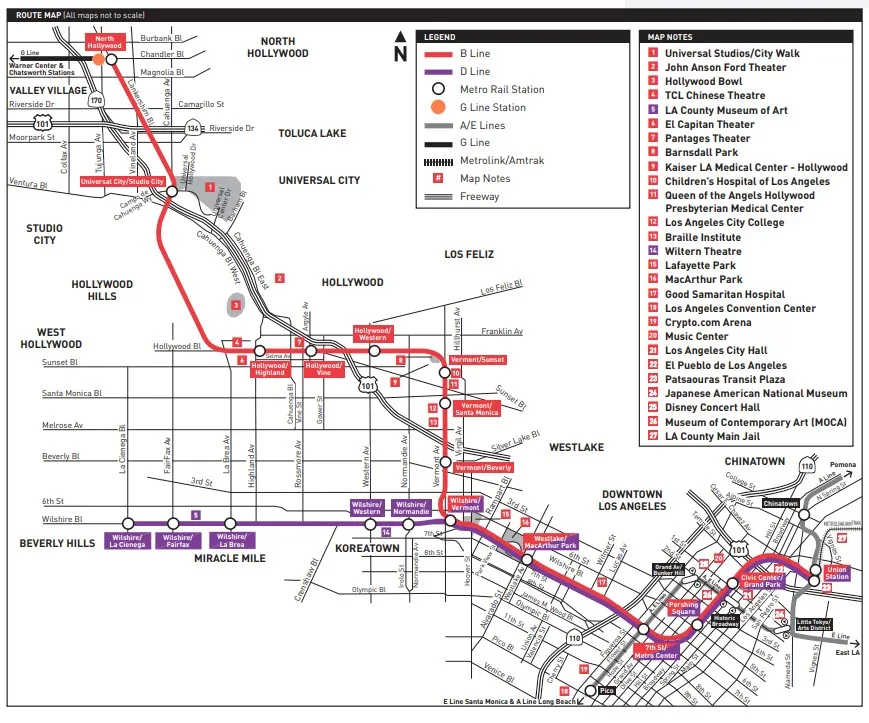
The $3.5 billion four-mile D Line Extension Section 1 will travel from Wilshire/Western in L.A.’s Koreatown all the way to La Cienega/Wilshire in the city of Beverly Hills. The project includes three new stations: Wilshire/La Brea, Wilshire/Fairfax, and Wilshire/La Cienega.
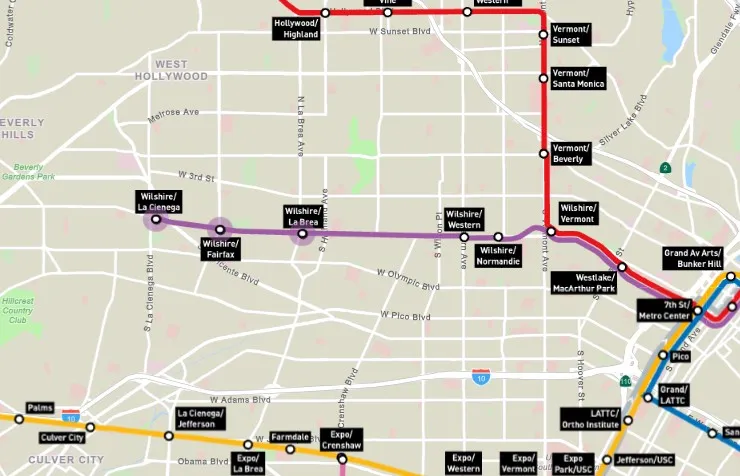
When Metro broke ground on what was then called the “Westside Purple Line” at a ceremony at the L.A. County Art Museum, section 1 was expected to be completed in 2023. Among several obstacles causing delays, Metro encountered and overcame challenging tunneling conditions.
https://www.tiktok.com/@streetsblogla8/video/7630890034123623710
Streetsblog has been covering the progress of the D Line for more than a decade. Below are a couple of D Line facts that you may or may not already know.
It will be fast
In L.A. County, most rail trips are not faster than driving. Metro buses and light and heavy rail move fairly fast. Every day, transit gets a million Angelenos where they need to be. There are exceptions, but when comparing trip times today, driving is almost always faster than transit.
There are great reasons to take Metro transit – driving stress, parking, gas prices, health, environment – but comparative travel time typically is not where Metro comes out ahead.
The D Line is different.
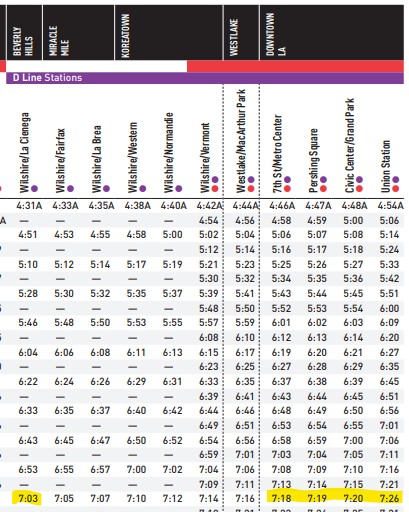
Metro has already posted the new timetable for the D Line and it’s so fast it seems almost unimaginable for Angelenos.
Riding the D Line from the L.A. County Museum of Art (LACMA) to City Hall will take just 15 minutes. The nine-mile trip from one end of the D to the other – from La Cienega to Union Station – will take just 23 minutes.
At less congested times of day, those same trips might run 30-40 minutes in a car. At rush hour, you’d probably want to budget an hour to be safe.
There are lots of factors that influence overall trip time for various modes – e.g. congestion, parking, reliability, transit frequency, first/last mile walk/bike facilities, etc.
The D Line is remarkably fast; for many trips, fast enough to compete favorably with driving.
It will improve the lives of transit riders
If you read comments sections, you will find some people complaining that there’s no point in providing a subway to Beverly Hills, because rich people live there and rich people won’t ride transit. The residents of Beverly Hills, which long ago (meaning until ~2018) bitterly fought the D Line, likely do ride transit less often than folks living in less tony areas.
True as that may be, Beverly Hills is also destination. For workers who often struggle with expensive and/or time-consuming commutes. For visitors who want to have the full experience of Los Angeles. And for other Angelenos who might otherwise not be able to access a community that has made a point of making itself less accessible – including by opposing effective transit, and by targeting of Black and Latino drivers and pedestrians.
A lot of people who are not wealthy enough to live in Beverly Hills work there: domestic workers, restaurant workers, janitors, teachers, etc.
Even if wealthy folks in Beverly Hills ride infrequently, plenty of working class folks already take transit to commute to their Beverly Hills jobs. Even if the D Line never attracts a new rider, when it cuts a 40-60 minute bus commute down to 20-30 minutes, it will give workers more time to spend with their loved ones. It will get transit riders more places more punctually and more reliably. It will improve transit rider access to more places – more jobs and other destinations.
It’s in the right place
Wilshire Boulevard is one of the best places to improve Southern California transit – because of its existing concentration of population and jobs. Author/scholar Ethan Elkind notes (including in D Line coverage at the L.A. Times today) that Wilshire is the most densely populated corridor west of the Mississippi River.
Transit agencies often get political pressure to invest in high quality transit that serves less dense parts of the region. No Metro rail line is empty, but some Metro rail has been built in relatively low population density areas, where it struggles to attract large numbers of riders. Transit riders are already plentiful on Wilshire, which sees 30,000+ weekday daily boardings on Metro 20 and 720 buses.
The D Line is Metro is greatly improving service exactly where it is most needed.
Even more D Line Subway in the near future
This week’s opening is the first of three new D Line segments, all under construction and expected to be open by 2028.
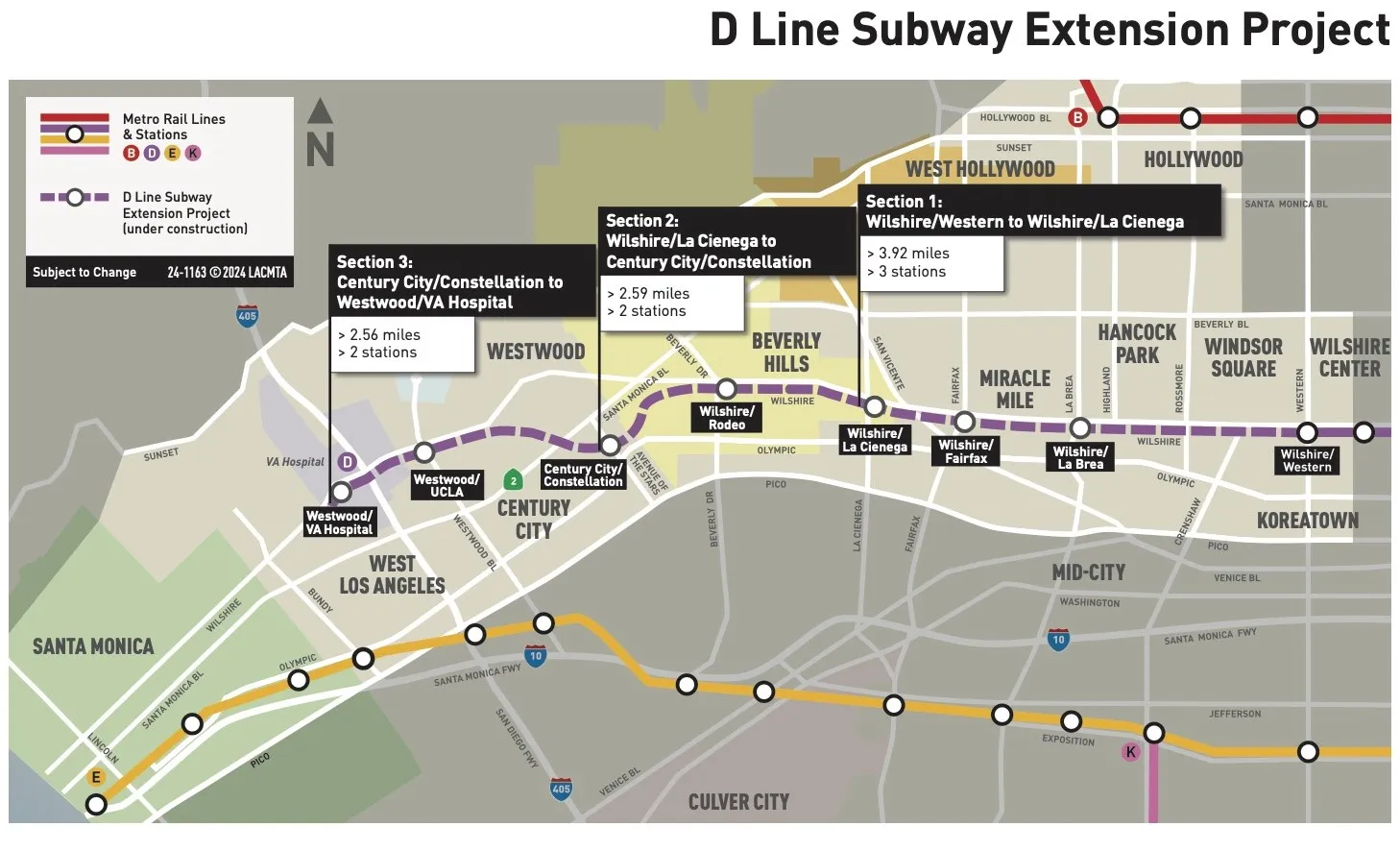
Very soon, the D Line will extend about 14 miles – from Westwood to Union Station. Take a peek at the next section’s new stations nearing completion.
Read more more about the D at Metro’s The Source, LAist, L.A. Times, and the Beverly Press.
SBLA will be putting the D Line to the test later this month. On May 19, Streetsblog will host a commuter race: the D Line Dash. The event pits three racers – a transit rider, a cyclist, and a driver – getting from Beverly Hills to Downtown Los Angeles.