

City Manager Oliver Chi released data from the first two years of service for the Therapeutic Transport Team and the program is showing measurable results.
The city began the Therapeutic Transport Team (TTT) pilot in January 2024 in partnership with the Los Angeles County Department of Mental Health to provide specialized responses to people experiencing mental health crises. The goal was twofold: connect residents to appropriate behavioral health care and relieve pressure on police officers and firefighters who had historically handled those calls.
In 2025, the TTT van responded to 336 calls for service. Demand remained steady throughout the year, peaking in March with 37 calls and again in August with 36. The average incident lasted 1 hour and 49 minutes, including transportation time.
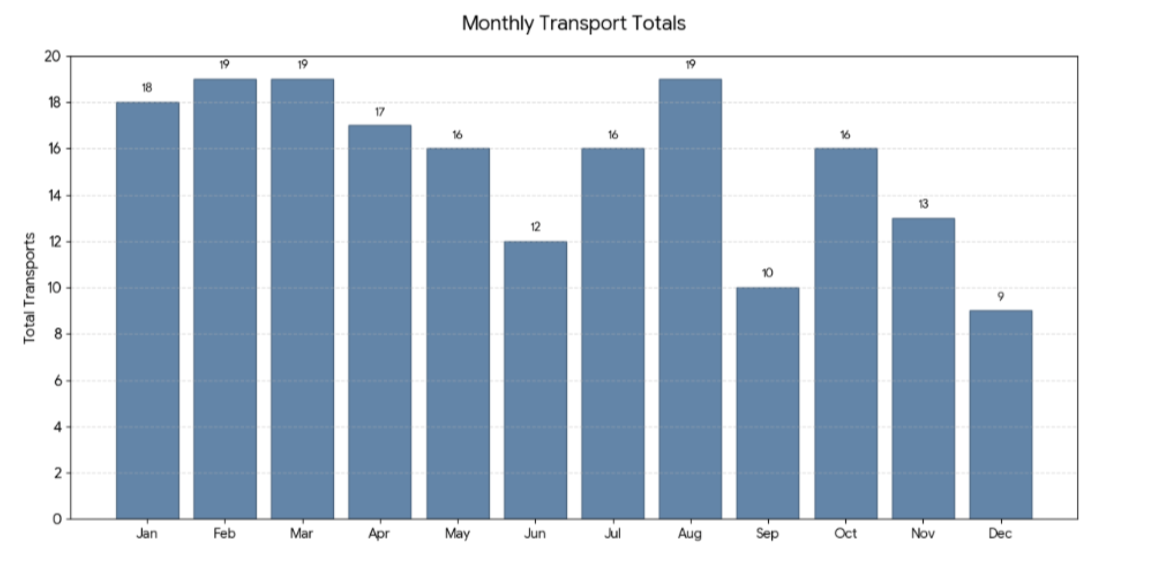
Of the 336 calls, 184 resulted in a transport to a treatment facility — a 55 percent transport rate. The TTT van itself handled 57 of those transports, accounting for 31 percent of the total. Ambulances carried 48 percent of transports, police handled 14 percent, and fire personnel 7 percent — underscoring a coordinated, multi-agency response.
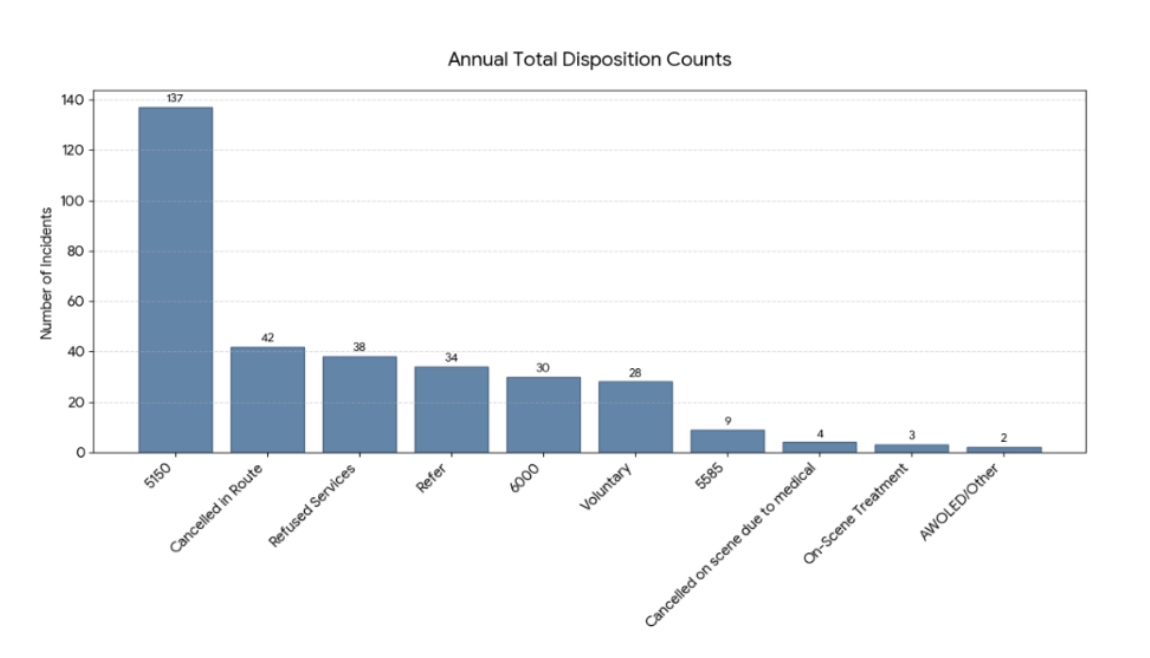
Disposition data highlights the seriousness of the cases. Involuntary psychiatric holds under 5150 accounted for 137 incidents, about 41 percent of all calls. There were also 30 voluntary 6000 holds and 25 voluntary resolutions. Some individuals refused service, and some calls were canceled en route — common outcomes in crisis work.
Notably, 61 percent of requests came outside the team’s weekday operating hours, suggesting demand for expanded coverage. Nearly half of all calls involved unhoused individuals.
“After two years of operation, the bottom line regarding our TTT pilot is this: the program is doing exactly what it was designed to do… connecting people in crisis to the behavioral health support they need, while freeing up our emergency responders to focus on other high-priority calls,” Chi wrote in his weekly update email before concluding. “Massive kudos to our HHS Department, and many thanks to our partners at DMH, for everyone’s continued work on this important program!”
Author
About The Author


