

Image: AARP
Greetings, I’m Dr. Paul Drew. I wrote a periodical called “Swish” about youth basketball at the Santa Monica Family YMCA. Now that I have retired from running the program, I have asked SantaMonicaNext if I can do articles about our community in regards to health and fitness or various happenings around the city. I’m a resident of Santa Monica for over 29 years and always looking to give back to the community, so I thought it would be best for my first article to mention a little bit about what I do, and give some helpful hints for safety with the older residents of our city.
I’m a Home Health physical therapist, and I see people in their homes in order to help them get their mobility back and reduce their pain, but most importantly make sure that they are safe in their home and even when they leave their home.
Falls are the biggest reason for my seeing patients at their home.
Approximately one in four (25%–28%) adults aged 65 and older falls annually, with over 60% of these incidents occurring at home. Indoor falls, often occurring in hallways or living areas, increase with age, with average rates ranging from 0.28 to 0.50 per person per year depending on the age bracket (65–89).
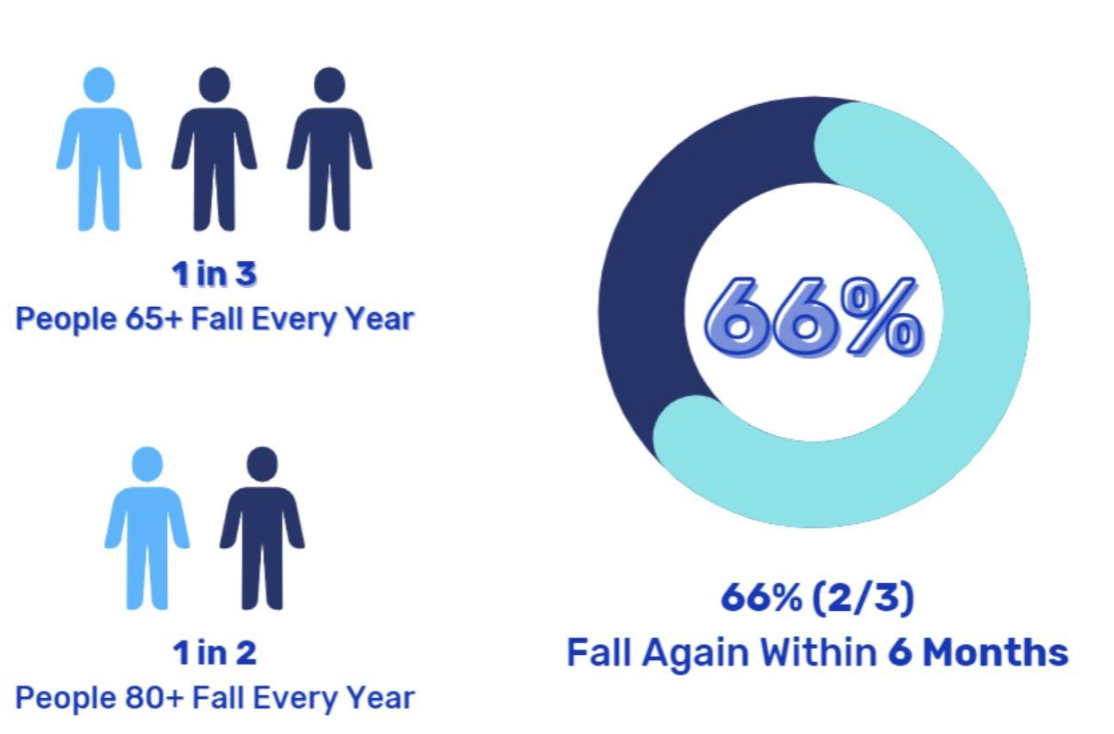
Key Statistics on Senior Falls:
● Annual Prevalence: Around 27.5%–28% of older adults report falling each year.
● Location: Over 50% to 60% of these falls occur inside the home, including hallways,
bedrooms, and bathrooms.
● Risk Factors: The risk increases with age, with up to 50% of people in their 80s and 90s
experiencing falls.
● Injury Rate: Approximately 10%–20% of falls result in serious injury (e.g., hip fractures,
head traumas).
● Recurrence: Falling once doubles the probability of falling again.
Common Causes for Indoor Falls:
● Tripping hazards (rugs, clutter, poor lighting).
● Muscle weakness and balance issues.
● Medication side effects.
Effective prevention strategies, such as physical therapy, home safety assessments (removing rugs, installing handrails in halls), and medication reviews, are critical for reducing this percentage.
Patients that I have seen in the past, had injuries from falls in the middle of the night, or early in the morning, as they were getting out of bed to go to the bathroom. Often times, seniors get out of bed too quickly before getting their circulation up to a more normal level, and suffer the effects of orthostatic hypotension in which a quick change in position causes a rapid drop in blood pressure that leads to the person being lightheaded and then faints or collapses after only a few steps, thus leading to an injury from the fall.
When we are sleeping, the blood circulation is at a very low level, and just enough to keep our vital organs functioning as we sleep. The rest of the body is at a low level of blood circulation, especially our legs. It is important that we get some circulation going in our legs before we “jump” out of bed.
I tell my patients to perform ten ankle pumps of both feet, before they sit up in the bed to then get up and walk from the bed. The action of flexing the foot back and forth, will contract the calf muscles to get blood through the legs and the rest of the body to bring the circulation up to a more normal level to avoid being lightheaded and falling when getting out of bed.
I used to give the same advice to my late father who lived to be 93 years old however days before his 90th birthday he got out of bed at five in the morning, and did not perform the ankle pumps, took a few steps and collapsed and fractured his pelvis and had to spend his 90th birthday in rehab; even he admitted that he forgot to do the ankle pumps but he would recover, and this is why I always give this advice because this will help prevent many of these falls from
happening. I still perform the ankle pumps myself when I wake up at night or in the morning because it can happen to any of us at any age.
Hopefully this will help, and look forward to giving more advice in the future.
Dr.Paul Drew-physical therapist
Samodoc on Instagram
