

This is what progress looks like. It’s practical, it’s measurable and it’s moving us forward,” said Mayor Caroline Torosis at a ceremonial groundbreaking yesterday for a major expansion of the city’s zero-emission bus system. “This systemwide move to cleaner transit is something for our city and residents to be proud of. When transit is reliable and accessible, people choose it, and those choices add up to a healthier, more sustainable city.”
City officials and state leaders gathered at the Big Blue Bus yard to mark the start of construction on a $56 million project to expand the agency’s zero-emission fleet and build out the charging infrastructure needed to support it. The project is largely funded by a $53.3 million grant from California’s Transit and Intercity Rail Capital Program.
The investment represents a significant step toward Santa Monica’s goal of a fully zero-emission bus fleet. Work is already underway on a new overhead gantry charging system designed to power up to 195 buses, a major upgrade that will allow the system to scale up electrification over the coming years.
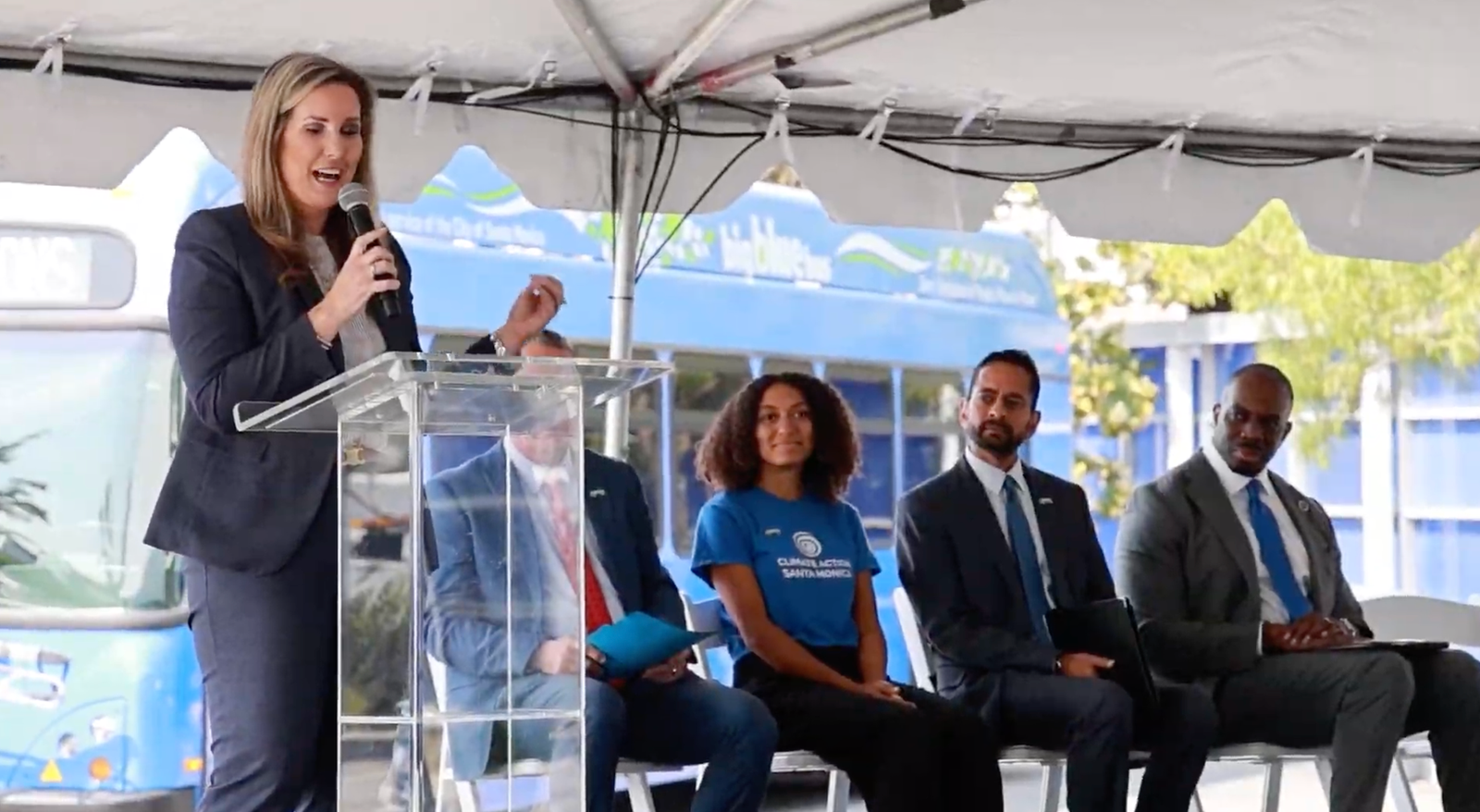
Big Blue Bus currently operates 34 battery-electric buses, and additional vehicles are planned as the agency works toward full electrification by 2032.
City officials emphasized that the project is about more than just new buses. Electrification is expected to reduce greenhouse gas emissions and improve local air quality, particularly in neighborhoods served by transit, while also lowering long-term fuel and maintenance costs. The construction phase is also expected to support jobs in engineering, electrical work, and clean energy.
“This project represents more than an infrastructure investment—it’s a transformation of how we deliver transit service,” said Transportation Director Anuj Gupta. “We’re building the foundation for a cleaner, more efficient system that benefits our riders, our workforce and our community.”
The project aligns with Santa Monica’s broader climate goals under its Sustainable City Plan, which calls for reducing emissions and expanding access to clean transportation options.
Author
About The Author


