

In 2024, the Santa Monica City Council faced a tough decision. The Los Angeles 2028 Olympic organizing committee (LA28) presented the city with a proposal to host the beach volleyball competition in a temporary mini-stadium built near the Pier.
The City Council expressed strong reservations about the proposal and instructed city staff to renegotiate its terms. LA28 largely refused to do so. In April of this year, LA28 announced that beach volleyball would instead be held elsewhere.
Looking back at the 2023–2024 City Council, it’s easy to remember the scandals, long meetings, and animosity between members. But with the benefit of hindsight, the council clearly made the right call by rejecting LA28’s proposal and not saddling its successors with the Olympics in the way Mayor Eric Garcetti did to Karen Bass. Instead, councilmembers backed their staff and consultants, who showed that hosting even a small part of the Games would be a financial loser for the city — costing an estimated $15.5 million while generating roughly $14.1 million in revenue.

Rather than inviting ICE and other federal agents into an Olympics-mandated security zone stretching miles around a volleyball venue, Santa Monica has focused on the best ways to welcome visitors — both international and domestic. And instead of shutting down the Pier for security reasons, as LA28 proposed, the Pier is now envisioned as a hub for cultural events and celebrations.
Last week, the city released a staff report outlining what events Santa Monica could host during the Olympics, how much revenue they could generate during an ongoing budget crunch, and the opportunities for residents and visitors alike. The City Council is scheduled on December 16 (Agenda, Item 11a) to consider authorizing exclusive negotiation agreements for a series of large-scale beachfront activations that would use prime public space.
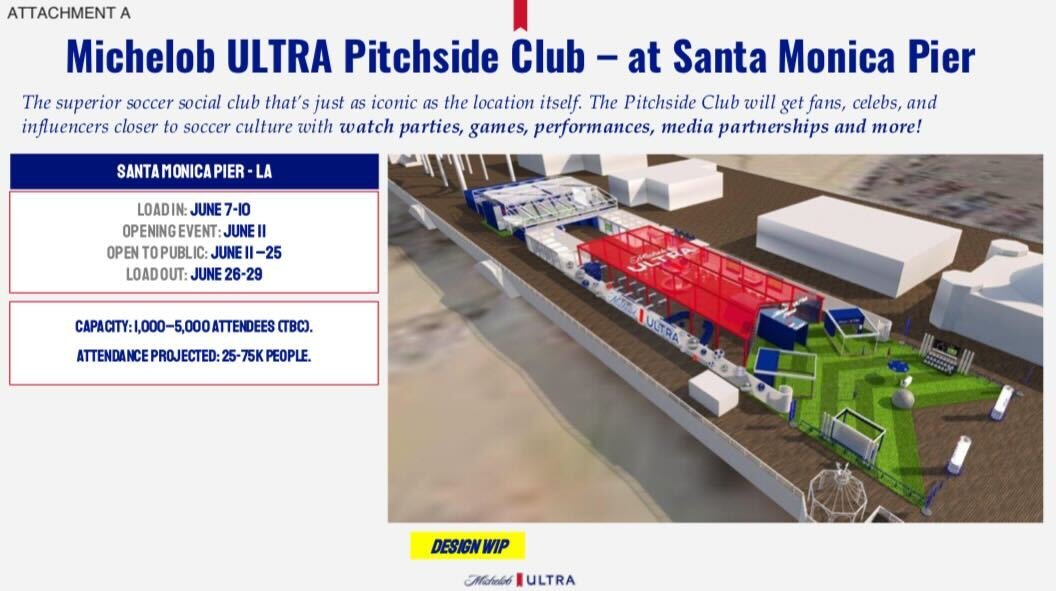
Next summer the international parties can begin with a World Cup fan festival at the Santa Monica Pier in June. This event featuring match viewing, branded experiences, live broadcasts, food and beverage options, and fan programming, will serve as the blueprint for attractions in 2028. The activation would occupy the Pier and adjacent areas for about three weeks, drawing thousands of visitors during Los Angeles-area matches.
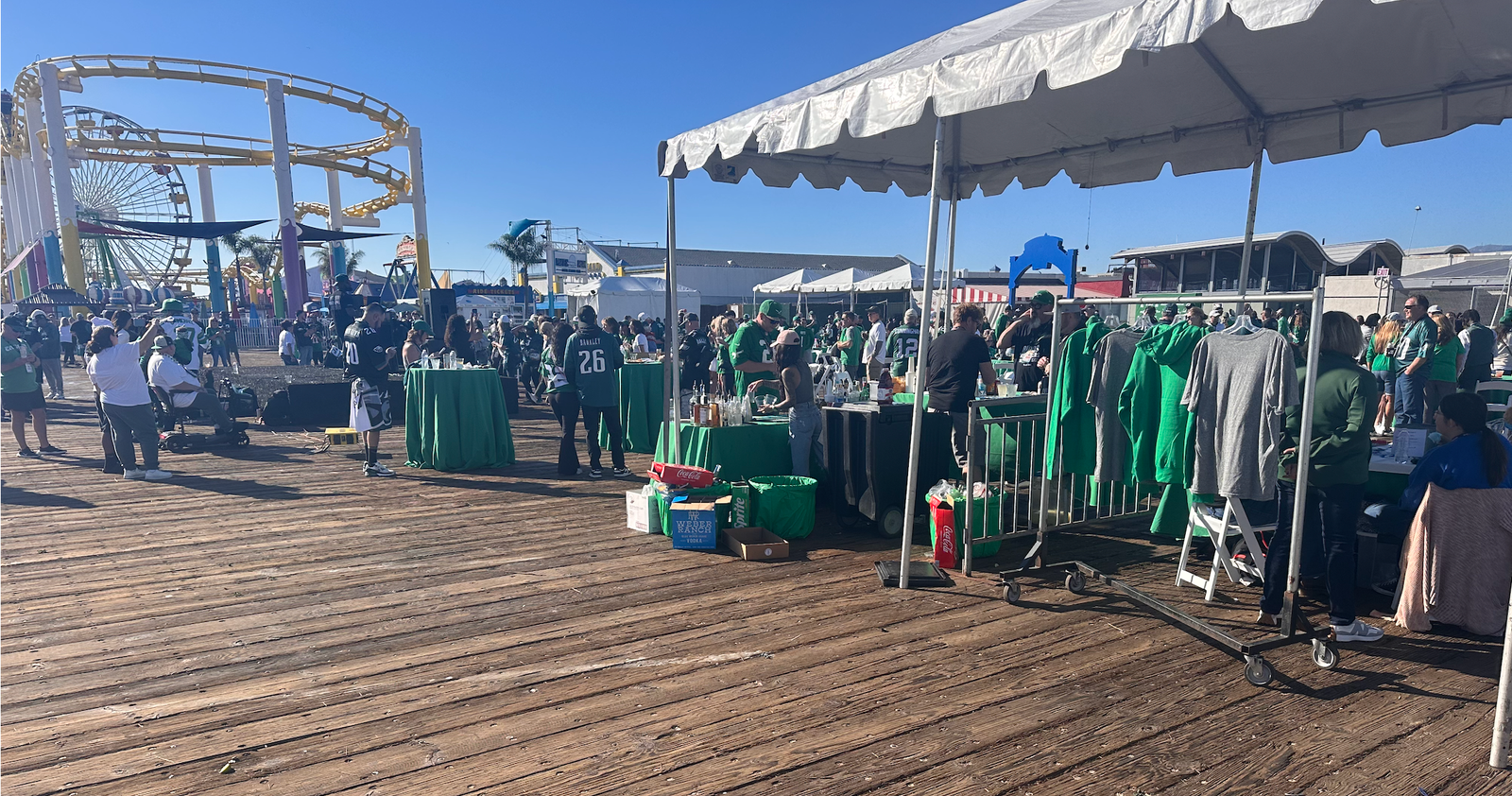
Regular Pier visitors are already familiar with smaller sports rallies. Recently, a travel company hosted a rally for visitors from Pennsylvania ahead of a Monday Night Football matchup between the Philadelphia Eagles and the Los Angeles Chargers. A World Cup or Olympic rally, however, could draw ten times as many attendees — or more.
Goldenvoice, the promoter behind festivals like Coachella, is exploring a multi-day fall music and cultural festival along the beach starting in late 2026, while ESPN is planning a broadcast and fan-engagement experience in early 2027 tied to a “major sporting event in the region.”
For the 2028 Olympics, two hospitality and engagement activations are proposed: “Club France” at the Annenberg Community Beach House, and a “Nations Village” and broadcast hub programmed by Hochsitz, a German broadcasting conglomerate at Crescent Bay Park and Lot 4 South.
All events would cover their own costs through unified license fees that include land use, parking displacement, and city services, ensuring Santa Monica does not incur a net loss. City staff are also working on code changes to allow necessary exceptions for large events.
This proposal is the first step in Santa Monica re-establishing itself as an international destination. Pop-ups are being discussed for events and retailers around the city, including Santa Monica Place and the Promenade (both of which would have been in the “security zone” had the city went forward with LA 2028).
In many ways, the current City Council inherited a mess from its predecessors — a reality shaped in part by the COVID-19 crisis and its long aftermath. But a different decision in the summer of 2024 would have severely hamstrung the current council and potentially taken any plans for a city renaissance off the table.
Author
About The Author


