

Juliette van der Meijden is an Urbanist & Strategic Advisor specializing in regenerative city building. She can be reached at juliette@curatedbyjuliette.com. All images in this piece are of Emscher Park Nord in Germany.
“Make no little plans; they have no magic to stir men’s blood and probably themselves will not be realized. Make big plans; aim high in hope and work, remembering that a noble, logical diagram once recorded will never die, but long after we are gone will be a living thing, asserting itself with ever-growing insistency. Remember that our sons and our grandsons are going to do things that would stagger us. Let your watchword be order and your beacon beauty. Think big.”
At the time Daniel Burnham uttered these words, he wasn’t just talking about architecture; he was talking about the American spirit—the audacity to look at a vast, industrial void and see a legacy. Burnham was the architect-planner who, under the auspices of the Commercial Club, dared to reclaim the Chicago’s lakefront for the public in the beginning of the 20th century.
Today, Santa Monica stands at such a threshold. The 192-acre Santa Monica Airport site is not just a plot of land; it is a test of our collective imagination and our commitment to a sustainable future.
The Pitfall of the “Grass Shopping Mall”
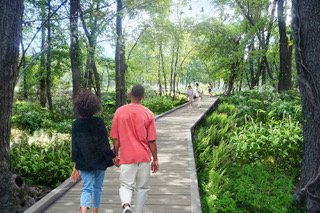
Following the recent LA Climate Week presentations, the stakes for the Phase 3B Framework have become crystal clear. The current Phase 3B Framework risks falling into a familiar trap: a 20th-century model of amenity-driven landscaping. To the untrained eye, the plans look like a park, but they function like a shopping mall of programmed activities on grass. This approach creates a fragmented, free-for-all of personal interests—a “domesticated” space that fails the majority of the region’s inhabitants.
We have seen the alternative play out in the Orange County Great Park in Irvine. Despite its massive scale, it has struggled for decades with a fragmented identity, feeling more like a collection of disconnected sports complexes and parking lots than a cohesive sanctuary. It is a cautionary tale of what happens when we prioritize “uses” over “ecology.”
The Bold American Vision: Lessons from City Hall
Santa Monica has a history of proving the skeptics wrong through sheer, visionary boldness. This “can-do” spirit is well illustrated in City Hall East, a global beacon of regenerative design. As a “Living Building,” it even features a world-renowned foam-flush composting toilet system that uses a mere tablespoon of water per flush, turning waste into a resource. That is the boldness and vision that defines us: the willingness to implement radical solutions that actually work.
To find the future of Santa Monica’s airport, we should look at examples such as Freshkills Park in New York City. Once the world’s largest landfill, it is being transformed into a massive 2,200-acre productive ecosystem. Like the airport’s 18-inch-deep concrete landing strip, Freshkills dealt with “gray infrastructure” of the most difficult kind. Instead of just covering it with turf, they utilized high-level ecological engineering to create a regional lung—a site for massive carbon sequestration and bird habitat that serves as a global model for reclamation.
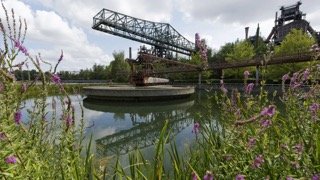
In Europe, the IBA Emscher Park in Germany used similar “Forest on Top” models to turn industrial scars into high-density forests. Santa Monica can do the same, utilizing innovative planting techniques to turn the heat-absorbing runway into a cooling, carbon-eating machine.
The Fiscal Case for Rewilding
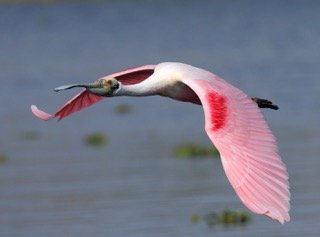
Beyond the ecological benefits, a rewilding strategy is a victory for the city’s treasury. Traditional “manicured” parks are a permanent drain on public funds, requiring constant mowing, synthetic fertilizers, and millions of gallons of water.
According to data from the U.S. Environmental Protection Agency (EPA) and the Trust for Public Land, the math is simple: traditional turf parks can cost upwards of $1.50 to $2.00 per square foot in annual maintenance. In contrast, a rewilded, native landscape—once established—can drop those costs by 60% to 80%, often requiring as little as $0.25 per square foot. By choosing a forest over a lawn, we aren’t just saving the planet; we are practicing elite-level fiscal stewardship of public money.
The Westside’s “Green Corridor”
This site is the missing link in a vital Green Corridor stretching from West LA to the Pacific Ocean. This isn’t just about aesthetics; it is “preventative health infrastructure.” By providing a continuous 192-acre cooling buffer and a sanctuary of silence, we are directly combatting the urban heat island effect and the modern epidemic of stress-related illnesses.
A “Regional Lung” does more than clean the air; it reduces the long-term burden on our healthcare systems. Every acre of forest we plant is an investment in the physical and mental longevity of our citizens.
A Legacy for the Next Century
To meet the climate moment, we must pivot toward undomesticating the city through three strategic shifts:
- Deep Rewilding over Managed Zones: We must shift from “districts” to a resilient, uncurated ecosystem. A park is not just a collection of sports courts; it is a biological ecosystem.
- Public Health as Infrastructure: In an era of increasing heat waves, 192 acres of unpaved, forested land acts as a critical cooling buffer. Every square foot of concrete “programming” we add is a withdrawal from our climate bank account.
- Mental Health Respite: What the modern urbanite lacks is not another pickleball court, but a connection to the wild. We need a sanctuary where the silence of the landscape provides a respite that a “shopping mall” of grass simply cannot offer.
The decisions made in this phase will echo for the next hundred years. We must resist the urge to fill every acre with a specific “use.” The most sophisticated use of this land is to let it breathe.
Let us ensure that when the gates of the airport finally open, we are stepping into a sanctuary that heals the city, not a subdivision of fragmented recreational “amenities.” Let’s choose a forest for the future over a park of the past. Let’s make a plan big enough, In Daniel Bunham’s words: “Let your watchword be order and your beacon beauty. Think big.”
