

A Los Angeles County Superior Court judge has dismissed the decade-long lawsuit challenging Santa Monica’s at-large City Council election system, granting the city’s motion for judgment on the pleadings in a case that has moved through multiple levels of California’s court system. The ruling was first announced by the Daily Press.
Judge Daniel M. Crowley announced the decision from the bench on November 6. He directed attorneys representing the city to prepare a formal written order reflecting the dismissal and circulate it to the plaintiffs’ attorneys for review. As of the November 7 report by the Santa Monica Daily Press, the written order had not yet been signed and entered by the court. That step is necessary before a final judgment is entered and the period for post-judgment motions or an appeal begins.
“We agree with the court’s decision,” stated Mayor Caroline Torosis.
“Santa Monica’s election system was never designed to exclude anyone, and the courts have confirmed it. Under our at-large system, every resident has a voice in choosing all seven members of the City Council, and every councilmember is accountable to the entire city. No neighborhood is limited to a single representative. Every neighborhood has seven. The City has defended that principle for a decade, and we will continue to defend it, because it gives Santa Monicans the strongest possible voice in their local government.”
The Lawsuit
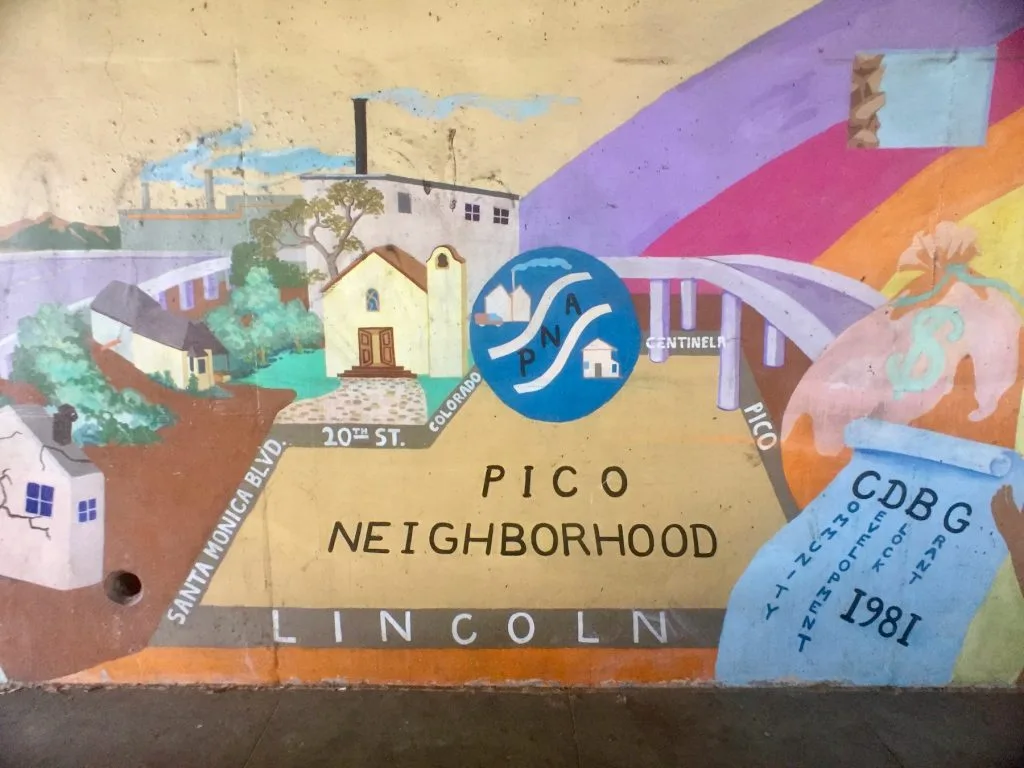
The lawsuit, Pico Neighborhood Association and Maria Loya v. City of Santa Monica, was filed in 2016. The plaintiffs challenged the city’s system of electing all seven City Council members through citywide, at-large elections. They argued that the system diluted the voting power of Latino residents, particularly those concentrated in the Pico neighborhood, in violation of the California Voting Rights Act (CVRA). The case also included a claim under the equal protection clause of the California Constitution.
The plaintiffs sought to replace the at-large system with elections in seven City Council districts. At the time the lawsuit was filed, Latino residents made up approximately 14% of Santa Monica’s voting-age population, according to the court reporting and case records.
How the Case Reached the Courts
After a six-week trial in 2018, Los Angeles County Superior Court Judge Yvette M. Palazuelos ruled in favor of the plaintiffs in February 2019. The court found that Santa Monica’s at-large election system violated the CVRA and the state constitution’s equal protection guarantee. The judgment called for the city to hold a special election using a seven-district map developed by an expert for the plaintiffs.
The City Council voted to appeal the decision. In July 2020, the California Court of Appeal reversed the trial court’s ruling, finding that the plaintiffs had not established that the at-large system diluted Latino voters’ ability to elect their preferred candidates. The appeals court also found that the plaintiffs had not proved the city adopted or maintained the system for a discriminatory purpose.
The California Supreme Court agreed to review the case, but its 2023 decision addressed the CVRA claim rather than the separate equal protection ruling. In August 2023, the state’s high court reversed the appeals court’s interpretation of the CVRA, finding that it had applied an overly restrictive standard for determining whether voting power had been diluted.
The Supreme Court said plaintiffs pursuing a CVRA claim do not have to show that a protected group would make up a majority of a hypothetical City Council district. Instead, courts must consider whether the group could elect its preferred candidate under a lawful alternative election system, potentially with the support of crossover voters.
The Supreme Court did not decide whether Santa Monica’s election system violated the CVRA. It sent the case back to the Court of Appeal for further consideration. In February 2024, the appeals court remanded the case to the original trial court for additional proceedings under the state Supreme Court’s guidance.
Santa Monica Next covered the 2023 Supreme Court decision and the 2024 return of the case to the trial court. The City of Santa Monica has a good public timeline for the case up to the 2024 documents.
The Latest Ruling
The city’s successful motion to dismiss relied on the U.S. Supreme Court’s April 2026 decision in Louisiana v. Callais. The decision addressed federal voting-rights law and the constitutional standards governing election challenges that involve race-conscious remedies.
In its motion, Santa Monica argued that the ruling established a requirement for evidence supporting a strong inference of intentional discrimination. The city said the plaintiffs could not meet that standard because the earlier Court of Appeal decision had already found that they failed to prove the city adopted or maintained its at-large election system for a discriminatory purpose. The California Supreme Court had declined to review that part of the appeals court decision in 2023, leaving it in place.
The plaintiffs opposed the motion, arguing that Callais concerned Section 2 of the federal Voting Rights Act and did not control claims brought under California’s voting rights law. They also pointed to the CVRA’s language, which does not require plaintiffs to prove discriminatory intent to establish a violation.
Crowley granted the city’s motion for judgment on the pleadings. The written order will establish the court’s formal ruling and provide the basis for any subsequent appeal or post-judgment motions.
The dismissal ends the case at the trial court unless the plaintiffs successfully challenge the ruling. The next step is the entry of the formal order and final judgment. The plaintiffs’ plans for any further appeal had not been reported as of November 7.
