
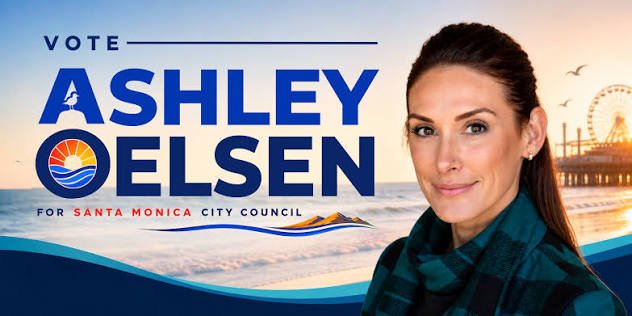
Ashley Oelson is the first candidate to return the questionnaire prepared by students in our journalism class at the Police Activities League. For more on Oelson’s campaign, check out her Instagram, Facebook and website.
If you are elected, what is the first thing you would want to do?
The first thing I would try to do is restore public comment time at City Council meetings to two minutes.
I believe one of the most important responsibilities of local government is listening to the people it represents. Residents deserve the opportunity to express their thoughts, opinions, concerns, and frustrations about the decisions being made in their city.
Over time, we’ve reduced the opportunities for people to have their voices heard, and the frustration in our community is palpable. People feel increasingly disconnected from their government, and I think that’s a serious problem.
I understand why public comment time was reduced. Our City Council meetings regularly run late into the night, sometimes well past midnight. But I don’t believe the solution to excessively long meetings should be taking time away from the public.
In fact, I think we need to address the bigger problem: Why are some of the most consequential decisions about our city’s future being made at one o’clock in the morning?
By that hour, councilmembers are exhausted, their attention is stretched, and everyone wants to go home. These are the people entrusted with making decisions involving millions of taxpayer dollars, public safety, housing, and the future of our community. Those decisions deserve thoughtful discussion, careful consideration, and clear minds.
I don’t believe it’s in our city’s best interest to make major policy decisions when everyone is operating on exhaustion. We need to manage our meetings more eUectively, prioritize important agenda items earlier in the evening, and respect everyone’s time, including the public, city staff, and councilmembers.
We shouldn’t have to choose between giving residents a voice and having an eUective, wellfunctioning City Council. We can and should do both.
Restoring public comment time would be a relatively simple first step, but it would send an important message: City Hall belongs to the people. Their participation isn’t an inconvenience. It’s an essential part of democracy.
And ultimately, good government isn’t just about the decisions we make. It’s about how we make them.
If you could be remembered for one thing for your work in City Council, what would it be?
I would want to be remembered as someone who helped restore people’s trust in their local government, protected Santa Monica for future generations, and helped make our city a national leader in environmental sustainability once again.
I’m a conservation biologist, and much of my career has been spent protecting wildlife, natural resources, and places that cannot be replaced once they’re gone. I think about our city in much the same way.
One of my greatest hopes is to help solve some of Santa Monica’s most pressing environmental challenges. I want to improve our ocean water quality, modernize our aging storm drain infrastructure, reduce pollution and harmful runoU entering our beaches, and help our city achieve greater water independence and self-sufficiency. We live alongside one of the most extraordinary natural resources in the world, the Pacific Ocean, and I believe we have a responsibility to protect it.
Santa Monica has a remarkable history of environmental leadership and innovation. I want us to reclaim that position, not simply by setting ambitious goals, but by implementing real, measurable solutions that improve people’s lives and protect our environment.
But protecting a community is about more than protecting its natural resources. Santa Monica is special because of its beaches, parks, neighborhoods, small businesses, and, most importantly, the people who call it home. It also means making sure families can afford to stay here, children have safe places to play, and young people have opportunities to build their futures here.
I’m also a mom, and I often think about what Santa Monica will look like when my son is my age. Will our beaches be cleaner? Will our neighborhoods be safe and welcoming? Will our city have enough water to sustain future generations? Will young people who grow up here be able to aUord to build their own lives here?
Those are the questions that motivate me.
Ultimately, I don’t need to be remembered for one particular project or accomplishment. I would rather be remembered as someone who listened, brought people together, made thoughtful decisions, and left our city better than I found it.
If, years from now, young people can say that Santa Monica is a safer, healthier, more sustainable and welcoming city where they feel they belong, that would mean far more to me than having my name on a building or a plaque.
What can we/you do to raise more money for schools so we can have better supplies and working water fountains? Do you support Measure ES?
I believe that education is one of the most important investments we can make in our community. Every child deserves access to the resources, opportunities, and support they need to succeed, regardless of their family’s financial circumstances.
Education has been one of the most important influences in my own life. It shaped who I am, opened doors I never imagined possible, and gave me the foundation to pursue my passions and make a difference in the world. I want every child to have those same opportunities.
As a mother, I find it unacceptable that students are asking questions about basic necessities like working water fountains and classroom supplies. These shouldn’t be luxuries. They should be the bare minimum.
I also believe we need to support our teachers. Teachers should be able to focus on educating, inspiring, and supporting their students, not worrying about whether their jobs will exist next year. Job security and stability are important not only for teachers but also for the students who depend on them.
As for Measure ES, I am supporting it, but reluctantly.
I have serious concerns about how this measure was developed, structured, and presented to voters. I believe it has numerous significant flaws, including the fact that it has no sunset provision. I also question the process behind its creation and whether our schools are being used to persuade voters to approve another parcel tax because the city is struggling financially.
I don’t think that’s an appropriate way to approach such an important issue, and I believe our community deserves greater transparency and accountability.
But ultimately, I must consider what is at stake for our students, families, and teachers. I don’t want children losing educational opportunities or teachers worrying about their livelihoods because adults couldn’t find a better solution.
So, while I believe Measure ES could and should have been constructed much better, I am supporting it because I believe the consequences of further uncertainty for our schools could be far more damaging.
Moving forward, I want to see much stronger financial oversight, better collaboration between the city and school district, and a serious examination of how we fund education sustainably without continually asking residents to pay more.
Our children deserve excellent schools, and our taxpayers deserve responsible government. We should never have to choose between the two.
How do we help people get around that are too young to drive and might not have easy access to a bus?
I think this is an important question because young people deserve the freedom to get around their own city safely and independently.
Santa Monica is a relatively small city, and there is no reason why getting to school, visiting friends, going to the library, or spending time at the beach should be so difficult.
I would like to see safer walking and biking routes, better connections between neighborhoods, and more transportation options designed specifically around where young people need to go.
That means improving sidewalks, crosswalks, and street lighting, but also looking at whether our existing transportation services are meeting students’ needs. Is it safe? Do students feel safe? Do parents feel safe?
I would also like to explore partnerships with schools, recreation programs, and transportation providers to create more reliable options for young people who don’t live near a convenient bus route.
And I would want students involved in planning those improvements. Adults sometimes assume they know what young people need without asking them.
My goal would be a Santa Monica where young people can safely and independently enjoy everything our city has to oUer, regardless of whether their parents can drive them.
Bonus: What is something adults in Santa Monica are arguing about that you think is a waste of time to argue about?
I think adults in Santa Monica spend far too much time arguing about who is right and who is wrong, rather than figuring out how to solve problems together.
Sometimes it feels like people are so focused on winning an argument that they forget what they were arguing about in the first place.
We all want a safe, healthy, thriving community. We might disagree about how to get there, but that doesn’t mean we have to treat one another like enemies.
I also think we spend too much time putting people into categories based on their political opinions. Just because someone disagrees with you about one issue doesn’t mean you can’t agree with them about something else.
I’ve spent my career working on complicated environmental issues, and I’ve learned that meaningful progress often requires bringing together people with very different perspectives.
I wish adults would spend a little less time fighting with each other and a little more time listening, especially to young people who are going to inherit the consequences of the decisions we’re making today.
If you were looking to interview someone about the topic of your choice, who would you interview and what would it be about.?
If I could interview anyone in history, I think I would choose Nelson Mandela.
There are so many people I would love to sit down with, including Albert Einstein, Cleopatra, and Alexander the Great. I’m fascinated by history, science, human behavior, and the decisions that shape civilizations.
But Mandela stands out to me because of his extraordinary ability to emerge from 27 years of imprisonment without allowing bitterness and resentment to define his leadership.
I would want to understand how he found the strength to choose reconciliation over revenge, how he maintained hope through so many years of injustice, and how he brought people together who had spent generations divided by fear, hatred, and inequality.
I think one of the greatest challenges we face today, even in a community like Santa Monica, is learning how to disagree without dehumanizing one another.
I would ask him what he believed made someone a truly great leader, and how we can help people recognize that our shared humanity is more important than our differences.
I think that would be an extraordinary conversation.
If you had a Elons musk money what would you do to support the people of Santa Monica
First, I would probably make sure every school in Santa Monica had working water fountains!
But seriously, if I had that kind of money, I would want to invest in things that would make a lasting difference in people’s lives.
I would help make sure families could aUord to stay in Santa Monica, support our public schools, improve our parks and recreational facilities, and create more opportunities for young people.
I would also invest in protecting our coastline, restoring natural habitats, improving water quality, and preparing our city for climate change.
One thing I would especially love to do is create more places where young people can explore their interests, whether that’s science, art, music, sports, or learning about nature.
I’ve been fortunate enough to work with wildlife around the world, and those experiences changed my life. I would love to help more young people have opportunities to explore the natural world and discover something they’re passionate about.
But I also believe something important: You shouldn’t have to be a billionaire to make a difference in your community.
Some of the most meaningful things I’ve seen accomplished started with ordinary people who cared enough to get involved.
And that’s exactly what you’re doing by asking these questions.
